
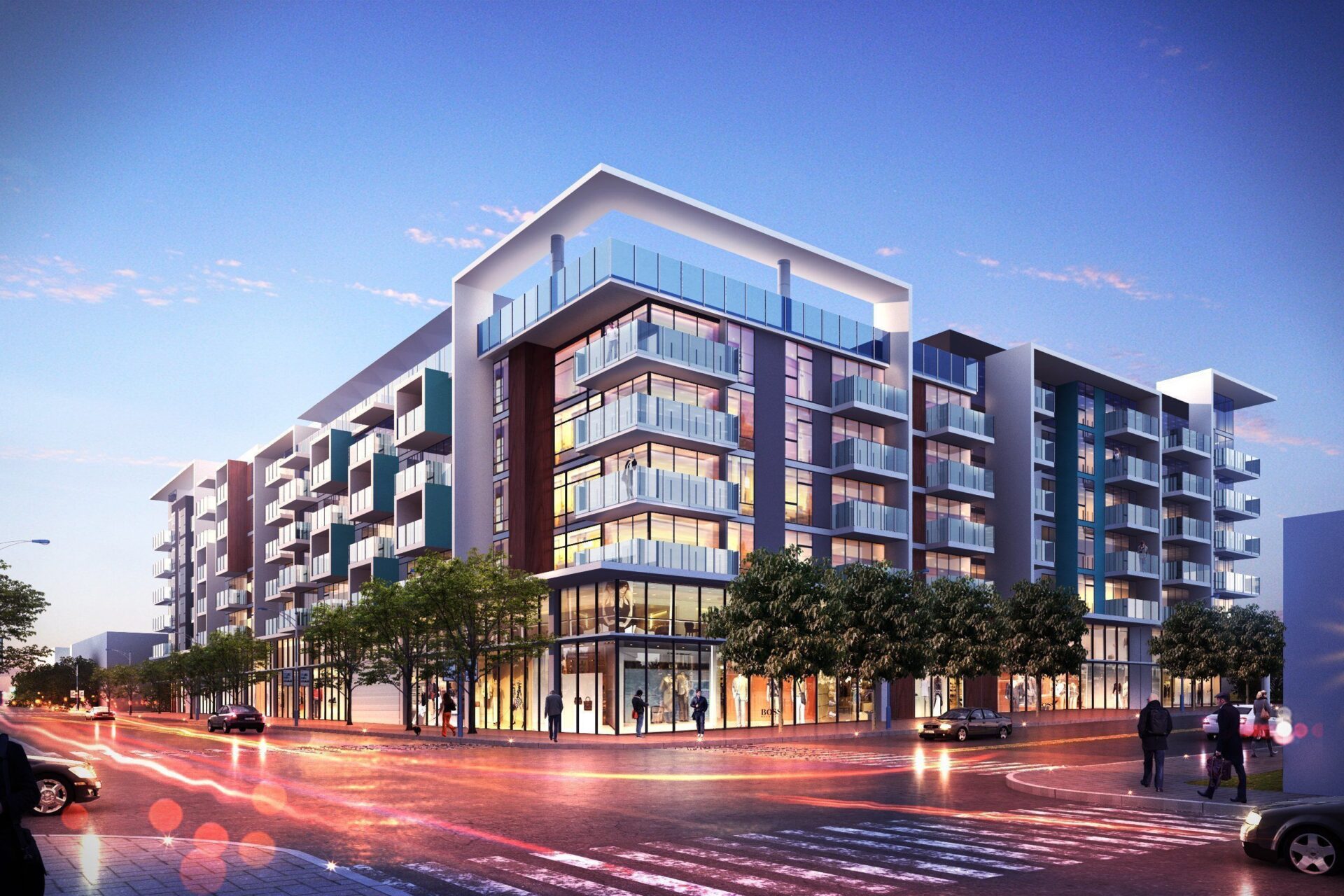
The multifamily property market in Palm Beach County presents investment opportunities across a wide range of property types and price points. Small multifamily — duplexes, triplexes, and fourplexes — provides entry-level portfolio building in markets like West Palm Beach, Lake Worth Beach, and Boynton Beach where these properties have strong rental demand from the working and professional class. Mid-size apartment buildings (5-30 units) represent the most active value-add category, where 1970s-1980s vintage garden apartments carry below-market rents and significant renovation upside. Larger apartment communities (50-100+ units) attract development capital from operators who understand the county's sustained population growth dynamic.
Unlike conventional financing that requires exhaustive documentation, personal income verification, and lengthy approval processes, our asset-based approach evaluates properties primarily on their income-generating capacity and value-add potential. For the DSCR-qualified investor running multiple rental properties from a complex income structure, or for the value-add buyer whose acquisition targets a property with below-market rents that conventional trailing-income underwriting disqualifies, our hard money programs open doors that institutional lenders keep closed.
The post-2020 population influx has been particularly consequential for Palm Beach County's multifamily market. New permanent residents — many relocating from high-cost Northeast markets — initially enter the rental market before transitioning to ownership. This flow of well-qualified renters has driven rent growth of 25-40% in most Palm Beach County submarkets since 2020, fundamentally improving NOI on stabilized assets and validating the thesis on value-add renovations targeting market-rate rents.
Our multifamily programs cover small 1-4 unit properties under our residential DSCR programs and larger 5+ unit buildings under commercial financing. Both require minimal personal income documentation and close in 10-21 days depending on complexity.
Service Applications
Acquisition financing is the primary application — closing quickly when a good multifamily opportunity surfaces in a competitive market. In Palm Beach County, good multifamily deals attract multiple competing bids; the investor who can close in 10 days at 75% LTV often wins over the investor who needs 45 days and makes the same offer. Our financing creates that competitive advantage.
Value-add multifamily projects — acquiring below-market-rent apartment buildings, renovating units as they turn over, and achieving market-rate rents on a property-by-property basis — represent perhaps the most compelling risk-adjusted strategy in the Palm Beach County market right now. We finance both the acquisition and the renovation capital in a single loan, underwriting on projected stabilized NOI after renovation rather than trailing below-market income.
BRRRR execution with multifamily — acquire, renovate, rent at market, refinance based on stabilized NOI, repeat — depends on fast, DSCR-qualified refinancing after the renovation phase. Our DSCR refinancing products provide the permanent capital side of this strategy for 1-4 unit multifamily; our commercial programs handle 5+ unit buildings.
Portfolio consolidation for investors who've accumulated multiple small multifamily properties through various financing sources — blanket loans that consolidate multiple mortgages into a single facility with unified terms and competitive aggregate pricing.
Common Challenges
Vacancy management is the primary operating challenge in multifamily. Even in Palm Beach County's strong rental market, individual units turn over, and renovation-in-progress buildings have temporary vacancy by design. We underwrite with realistic vacancy assumptions (5-10% depending on property type and location) rather than using full occupancy as a baseline.
Value-add projects carry the execution risk of renovation — contractor management, renovation quality, unit turn timing — alongside the market risk that projected rent premiums prove optimistic. We stress-test renovation rent assumptions against actual comparable rents achieved in the specific submarket rather than relying solely on pro forma projections.
Our Approach
We begin with rent comparables for the subject property's submarket — actual achieved rents for comparable units in the specific neighborhood, not county-wide averages. For value-add acquisitions, we analyze both current below-market rents and achievable post-renovation rents from comparable renovated properties nearby.
Throughout the loan term, we support value-add execution by managing renovation draws efficiently through milestone-based inspections. For investors approaching permanent financing, we provide market intelligence and timing guidance on when stabilization metrics will support refinancing.